
Power interruptions are just part of life in Nairobi, and for most households and offices, a cut doesn’t just mean the lights go off — the WiFi drops too, right in the middle of a video call, a stream, or a stretch of work. The good news is that this particular problem has very little to do with your ISP and a lot to do with one small, fixable gap in your own setup at home.
Why your internet drops even when the network itself is fine
Your connection depends on a short chain of equipment sitting in your house: the ONT (the small box the fiber cable plugs into), your router, and sometimes a separate WiFi access point or mesh unit. All of it runs on mains power. When KPLC cuts out, every link in that chain goes dark at the same moment — even though the actual internet, and our network delivering it, is still running exactly as normal. The outage is local to your equipment, not to your connection.
What a mini-UPS actually does
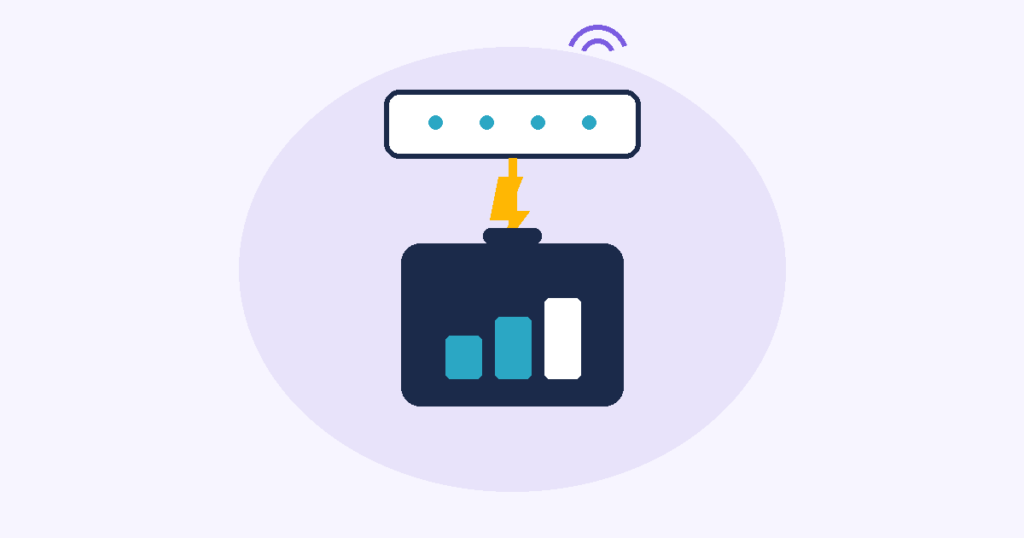
A mini-UPS (uninterruptible power supply) is a small battery unit that sits between the wall socket and your ONT and router. While the power is on, it charges quietly in the background. The moment the mains supply cuts, it switches to battery automatically, in a fraction of a second — fast enough that your router and ONT never actually lose power, so your WiFi simply keeps working through the outage instead of dropping and reconnecting once electricity is back.
What to look for when choosing one
- Right-sized capacity. A router and ONT together typically draw a small amount of power, so you don’t need anything close to the size of unit meant for a desktop computer — a compact 600–1000VA unit, or a dedicated small DC battery backup built specifically for routers, is usually enough.
- Matching output. Some mini-UPS units made specifically for networking gear supply DC power directly (often 12V) and plug straight into the same port your router or ONT power adapter normally uses, which is simpler and more efficient than running a full AC inverter setup.
- Realistic runtime. Depending on the battery size, expect anywhere from a little over an hour to several hours of backup — enough to ride out most local outages, even if it isn’t meant to keep you online indefinitely.
- Battery type. Lithium-based units tend to last longer, handle Nairobi’s heat better, and hold their charge more reliably over time than older lead-acid designs.
Don’t forget the rest of the chain
If you rely on a separate WiFi access point, extender, or mesh unit to cover the whole house or office, remember that it needs to be on the backup too — a fully powered router is no help if the access point covering your bedroom or your office floor is still dead. And it’s worth being clear-eyed about the limits: a mini-UPS solves a power problem, not a physical one. If a fiber cable itself is damaged during a storm or construction work nearby, no amount of battery backup will bring the connection back — that’s a fault our team needs to fix on our end.
Worth the small investment
For the cost of a single month of most internet packages, a mini-UPS is a one-time purchase that quietly removes one of the most common, most avoidable causes of “my internet isn’t working” — especially useful if you work from home, run a small office, or just don’t want a blackout to also mean losing connection to everyone and everything else.
If outages keep interrupting your connection and you’re not sure whether the issue is power-related or something on our end, give us a call on 0702 447 334 and our support team will help you figure out what’s actually happening.