
When people compare internet providers, they usually look at price and advertised speed. But a big part of what actually makes a connection feel fast — especially for local sites, streaming, and services — happens somewhere most customers never see: inside carrier-neutral data centers and internet exchange points right here in Nairobi.
Carrier-neutral data centers: why “local” matters
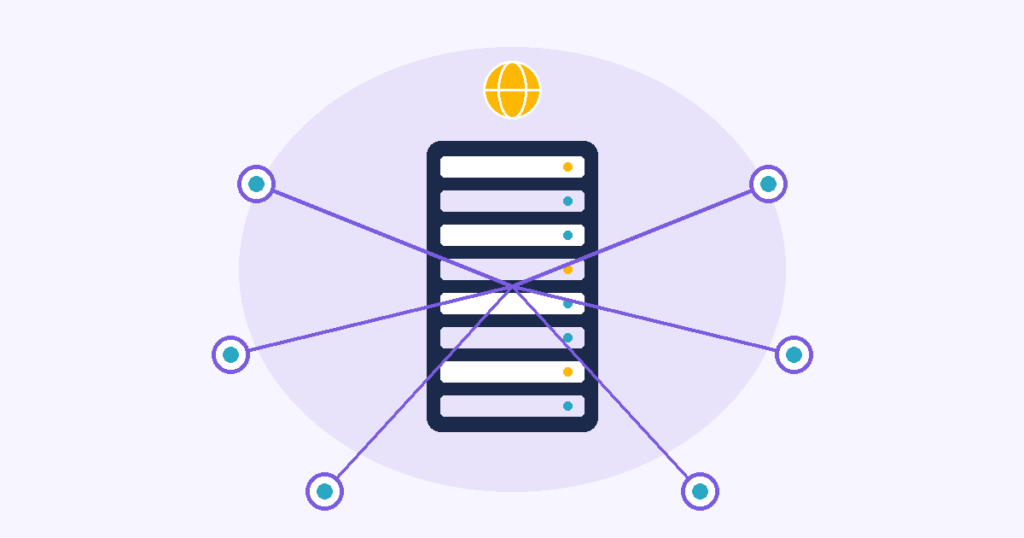
Facilities like the East Africa Data Centre (EADC) are carrier-neutral, meaning any ISP, cloud provider, or network operator can install equipment there and interconnect with everyone else on-site — instead of each provider building out its own separate, expensive infrastructure. For an ISP, having a presence in a facility like this means our network sits physically close to the other networks, content providers, and cloud services our customers use every day, rather than routing everything through a single distant point.
Peering and internet exchange points (IXPs)
This is where peering comes in. At an internet exchange point — in Kenya, the best known is KIXP (Kenya Internet Exchange Point), run by TESPOK since 2001 and one of the oldest and busiest IXPs in Africa, alongside interconnection points such as LINK Nairobi — local ISPs, mobile operators, and content networks connect directly to each other instead of routing local traffic overseas and back.
In practice, that means when you visit a Kenyan website, message someone on a local mobile network, or stream from a service that caches content locally, that traffic can stay entirely within Nairobi instead of taking a round trip through international cables. The result is lower latency, fewer points of failure, and traffic that keeps working even if an undersea cable somewhere gets cut.
CDNs: why some things load instantly and others don’t
Large platforms — Google, YouTube, Netflix, Facebook, and others — place caching servers, known as Content Delivery Network (CDN) nodes, directly inside local data centers and exchange points. Instead of every video or page load traveling all the way back to servers overseas, a copy is already sitting nearby. This is a big part of why some services feel noticeably faster than others: it usually has less to do with your package speed, and more to do with whether your ISP is well-peered with the CDN serving that content.
IP Transit: the traffic that still has to travel
Not everything can be peered locally. For destinations that aren’t present at a local exchange, ISPs buy IP Transit (IPT) — wholesale bandwidth from upstream providers that carries traffic out to the rest of the global internet. Peering and IP Transit work together: peering handles local and well-connected traffic efficiently and often at no cost between networks, while IP Transit covers everything else. A provider that leans too heavily on IP Transit for traffic that could have been peered locally ends up paying more, and passing slower, more congested routes on to its customers.
What this means for your WebSpace Internet connection
- Faster access to Kenyan and regionally hosted sites and services, since that traffic doesn’t leave the country.
- Better streaming and download performance from major platforms that cache content locally via CDN nodes.
- More resilience — local traffic keeps flowing even during international connectivity issues.
- More efficient use of bandwidth overall, which helps keep pricing honest instead of padding costs from unnecessary international transit.
It’s not the part of an ISP that shows up in an advert, but it’s a real part of why some connections simply feel better than others. If you have questions about how your connection reaches the rest of the internet, give us a call on 0702 447 334 — we’re happy to explain.